Black and white close-up representing blackheads and whiteheads clogged pore concern at CAMIBlack and white close-up representing blackheads and whiteheads clogged pore concern at CAMI

Blackheads and Whiteheads: Managing the Congestion That Keeps Coming Back

Blackheads and whiteheads are non-inflammatory clogged pores driven by excess sebum and slowed cell turnover. They clear with the right approach — and recur without consistent maintenance.

get started
Acne & Scarring

Blackheads aren't dirt. They're oxidized sebum. And pore strips don't fix the reason they keep forming.

What It Is

Blackheads (open comedones) and whiteheads (closed comedones) are non-inflammatory clogged pores — the earliest stage of the acne cycle before bacterial colonization and the immune response produce inflammation. They're extremely common, driven primarily by genetics and sebaceous gland activity, and found most frequently in the T-zone (forehead, nose, chin). They can exist in isolation without progressing to inflammatory acne, or they can precede and coexist with more inflammatory forms of acne.

Why Patients Seek Treatment

Patients come in about blackheads when they've tried multiple products and the congestion keeps coming back, or when in-office extraction is the only thing that gives them the clearance they're looking for.

UNDERSTANDING THE SCIENCE

Comedones form when sebum and dead cells accumulate faster than they shed.

What Causes It
Common Signs
Why It Changes Over Time
How It's Commonly Addressed
01

What Causes It

Comedones form from two converging processes inside the hair follicle.

Excess sebum production: Androgen-driven sebaceous glands produce more oil than the follicle can clear. This creates the saturated environment in which comedones form.

Abnormal follicular keratinization: Dead skin cells inside the follicle don't shed normally, accumulating and combining with sebum to form the plug. This is the most targetable part of the comedone cycle — retinoids normalize it directly.

In blackheads, the pore opening remains open and the top of the plug oxidizes, producing the characteristic dark color. In whiteheads, the pore seals over, trapping the material beneath.


02

Common Signs

Patients with blackhead and whitehead concerns typically describe:

  • Visible dark spots on the nose, chin, and forehead — most concentrated in the T-zone
  • Small, skin-colored or white bumps that don't become red or inflamed
  • Congested pores that feel rough under the fingertips
  • Skin that looks clear in some lighting and congested in others
  • A cycle of temporary improvement after extractions that quickly reverts
03

Why It Changes Over Time

Comedone formation typically peaks during adolescence as androgen levels surge. Many patients see improvement in their 20s and 30s, but hormonal fluctuation — menstrual cycles, perimenopause, stress-driven androgen elevation — can maintain significant comedone formation well into adulthood.

As skin ages, the sebum production that drives comedone formation typically decreases — which is why significant blackhead concerns are less common in patients over 50 than in younger adults.

04

How It's Commonly Addressed

Blackhead and whitehead management requires both clearing existing congestion and slowing new formation.

  • BHA exfoliation: Salicylic acid is oil-soluble and penetrates into the follicle, dissolving the sebum-and-cell plug that forms comedones. Daily or regular use is the most effective topical approach.
  • Retinoids: Normalize follicular cell turnover at the source, reducing the abnormal cell shedding that creates comedone plugs. Long-term use produces meaningful reduction in comedone formation rate.
  • In-office chemical peels: Salicylic acid and combination peels clear congestion more thoroughly than daily topicals and reduce sebum production temporarily. A series of monthly peels produces significant improvement.
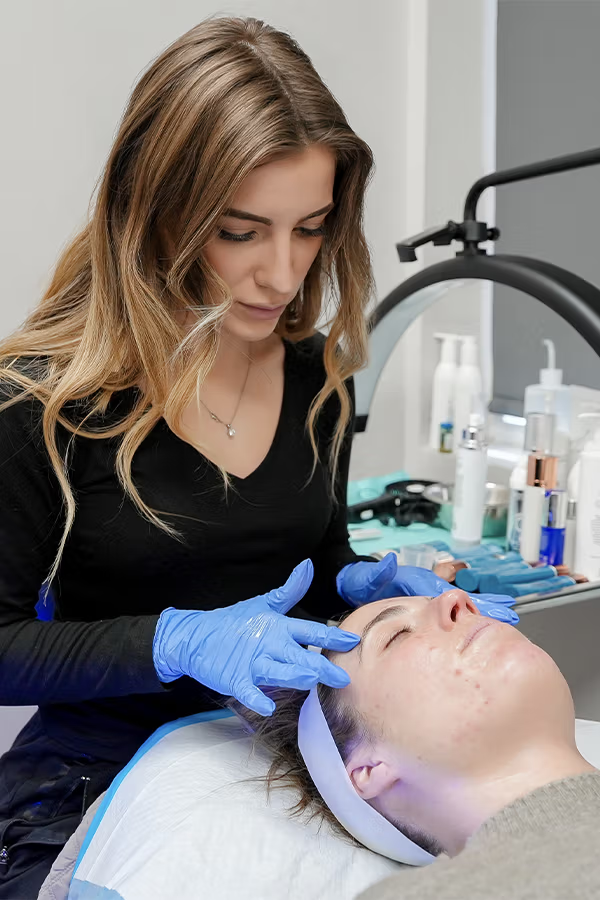
  • Professional extraction: Appropriate technique by a trained provider clears congested follicles without the inflammation and scarring risk of self-extraction.

We clear what's there and slow down what's forming.

At CAMI, comedone treatment is practical and maintenance-oriented. In-office peels and extraction produce the most immediate improvement. The at-home routine — BHA exfoliation and retinoids — determines how quickly congestion returns. Both matter. Patients who maintain the routine between treatment sessions see significantly better long-term results than those who rely on in-office treatment alone.

get started

Treatments for
This Concern

FAQ

What actually causes acne?
What causes oily skin?
What causes dull skin?
Can acne be permanently cleared?

Explore Related
concerns