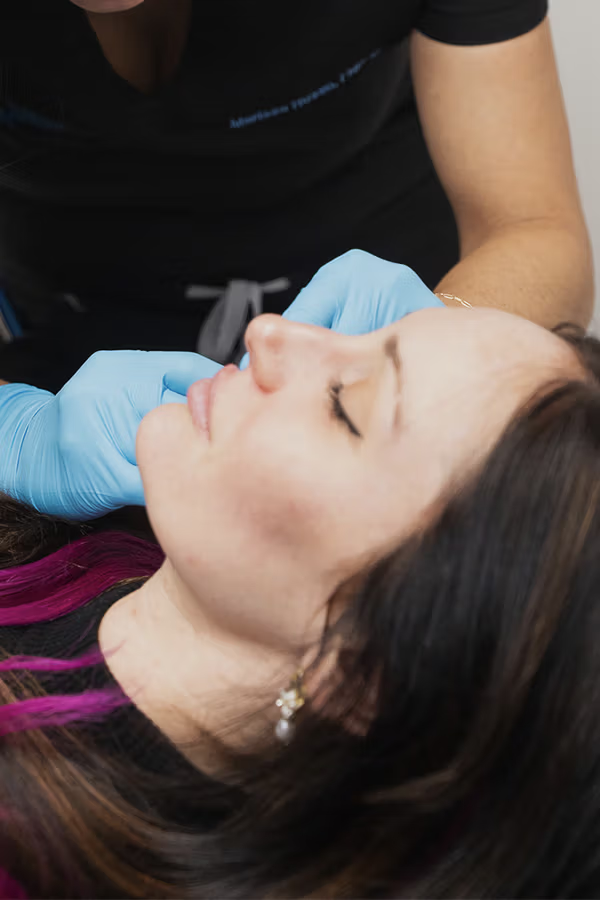
Black and white portrait representing perioral lines and lip border wrinkle concern at CAMIBlack and white portrait representing perioral lines and lip border wrinkle concern at CAMI

Perioral Lines: Why They Form and How to Treat Them

Vertical lines radiating from the lips are among the most difficult perioral concerns to address. Effective treatment requires targeting the muscle, structure, and skin surface together.

get started
Facial Balancing

The lines around the mouth tend to age faster than anywhere else on the face. There's a reason for that.

What It Is

Perioral lines are the fine to moderate vertical lines that form radiating outward from the lip border, in the skin above and below the mouth. Sometimes called lipstick lines or lip lines, they range from surface-level fine lines to deep static creases depending on age, sun exposure, smoking history, and genetics. Unlike many other facial lines, perioral lines form in an area with very limited structural support — which is part of why they develop earlier and can be more difficult to address.

Why Patients Seek Treatment

Most patients come in about perioral lines when they notice lipstick bleeding or when the area around the mouth starts to look older than the rest of their face. The lines may have been forming for years before they cross a threshold that becomes noticeable. The ask is usually to soften them without looking like the lip has been touched.

UNDERSTANDING THE SCIENCE

Perioral lines form where repetitive muscle meets thin, UV-exposed skin.

What Causes It
Common Signs
Why It Changes Over Time
How It's Commonly Addressed
01

What Causes It

Perioral lines have three primary contributing factors that compound over time.

Orbicularis oris contraction: The circular muscle surrounding the mouth contracts with every expression — speaking, smiling, sipping, kissing. Over decades, this repeated compression gradually etches vertical lines into the skin above and below the lips.

Collagen and elastin decline: As the dermis thins with age, the skin loses its ability to recover from repeated compression. Lines that once disappeared when the face relaxed begin to remain visible at rest.

Volume loss: The lips themselves thin with age, and the perioral fat pads deflate. This structural loss amplifies the appearance of existing lines by removing the tissue support that held the surface smooth.


02

Common Signs

Patients presenting with perioral line concerns typically notice:

  • Vertical lines radiating outward from the upper or lower lip, visible at rest
  • Lipstick bleeding into the lines above the lip border
  • A loss of lip border definition as the lip thins and lines form
  • Lines that deepen when puckering, but are also present at rest
  • The overall perioral area looking older than the rest of the face
03

Why It Changes Over Time

In the 30s, early perioral lines typically appear as dynamic — visible only during expression and disappearing at rest. SPF and retinoids started at this stage can significantly slow progression.

Through the 40s, lines begin to become static — present even at rest — as collagen loss and volume depletion compound the effect of repeated muscle movement. The lip border begins to lose definition. Lines can read as adding significant age to the perioral area even when the rest of the face looks well-maintained.

By the 50s, established static perioral lines are common. Treatment at this stage is effective but typically requires resurfacing in addition to injectables to address the skin quality component.

04

How It's Commonly Addressed

Effective perioral line treatment addresses the muscle, the structure, and the skin surface simultaneously.

  • Wrinkle relaxers: Low-dose neurotoxin placed in the orbicularis oris reduces the muscular contraction that deepens perioral lines and prevents further etching. Dosing must be precise — too much affects lip movement and expression.
  • Lip filler: Restoring lip volume provides structural support to the surrounding tissue and reduces the tissue collapse that amplifies line appearance. Also improves lip border definition.
  • Resurfacing: Chemical peels or laser resurfacing improve the skin's surface quality, reduce existing line depth, and stimulate collagen production in the dermis. Often the most impactful single treatment for established lines.
  • Skincare: Retinoids and SPF applied consistently to the perioral area slow the collagen breakdown driving line formation. Particularly important for prevention and maintenance.

We treat the mechanism, not just the line.

At CAMI, we don't treat perioral lines with a single syringe. The area requires a sequenced approach: relax the muscle driving repeated compression, restore the structural support that holds the surrounding tissue, and improve the skin quality at the surface. Any one of these alone produces partial results.

We're also conservative with neurotoxin in this area. The orbicularis oris is responsible for all lip movement and expression. The goal is reduced muscular tension without any perceptible change in how the lips function. Precision matters more here than almost anywhere else on the face.

get started

Treatments for
This Concern

No items found.

FAQ

Why do lines form around the mouth?
What's the best treatment for perioral lines?
What causes smoker's lines?
How are smoker's lines treated?

Explore Related
concerns