Facial Asymmetry: Why It Exists and When to Address It
Natural variation is part of every face. When asymmetry becomes structurally significant, precise injectable treatment can restore balance without erasing character.
get startedNatural variation is part of every face. When asymmetry becomes structurally significant, precise injectable treatment can restore balance without erasing character.
get startedFacial asymmetry is the difference in shape, volume, or position between the left and right sides of the face. Some degree of asymmetry is universal — it's a normal part of human facial structure. The asymmetry that prompts patients to seek treatment is typically one where the difference is pronounced enough to be visually distracting, or where one side has changed more than the other over time.
Patients who come in about facial asymmetry usually have one specific thing they've noticed — a brow that sits higher on one side, a cheek that's fuller than the other, or a jaw that angles differently in photos. Some have lived with it their whole lives. Others noticed it develop gradually. Either way, the ask is the same: make it more balanced without making it look treated.
Facial asymmetry has two broad categories: natural and acquired.
Natural asymmetry is genetic and present from birth. Bone structure, fat distribution, and muscle tone are all slightly different from side to side. This type tends to be stable and is simply part of how the face is built.
Acquired asymmetry develops over time. The most common drivers include:
Patients noticing facial asymmetry often describe:
Natural asymmetry is generally stable but may become more noticeable as surrounding structure changes. Age-related volume loss and skin laxity don't affect both sides identically — so an asymmetry that was barely perceptible at 30 may become more visible by 45.
Acquired asymmetry, by contrast, is progressive. Uneven muscle activity compounds over decades. Volume descends at different rates on each side. Prior filler that was placed slightly off can shift the visual balance of the whole face as surrounding tissue continues to change.
The result is that facial asymmetry tends to become more apparent with age, not less — which is why patients who've always had a mild asymmetry often first seek treatment in their 40s and 50s.
Non-surgical asymmetry correction targets the specific cause of the imbalance.
At Cami Aesthetics, asymmetry correction starts with understanding what's driving the imbalance — and being honest about what non-surgical treatment can and cannot change. Our goal is never a perfectly symmetrical face. The goal is a face that reads as balanced and proportionate, where the asymmetry is no longer the first thing you notice.
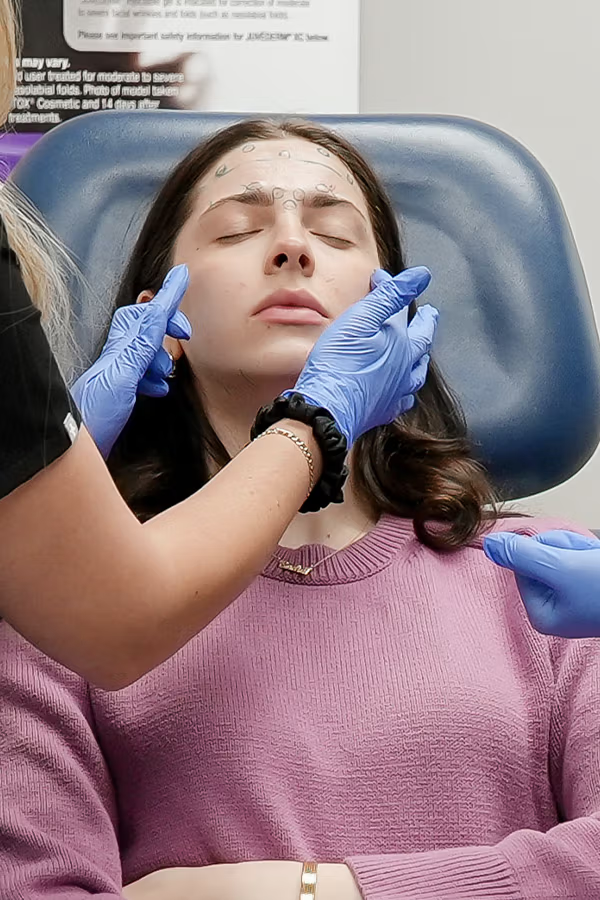
We assess both sides carefully before any treatment plan. Filler correction requires precise placement in the right plane and at the right volume — small corrections, evaluated, adjusted. We don't chase perfect. We chase better.
Care guided by experience, precision, and a deep understanding of natural beauty.
get started


I'm blown away with my Dysport experience with Madison. She is very knowledgeable, professional and meticulous.
Meredith is the absolutely best!! She is so sweet and her work is perfection! Always an amazing experience at Cami Aesthetics! Highly recommend.
.png)
I have been coming to Cami Aesthetics for 5 to 6 years now and their service is bar none! I’m always exceptionally pleased with my results, as I rotate Botox and Xenomin. The staff are very friendly and I always make me feel right at home!
I can’t say enough about the entire team at CAMI and overall experience as a new patient. My concerns were addressed and at no point did I feel rushed or pressured to make a decision. Katie and the entire staff put me at ease. My results are amazing and have made me feel so much more confident. Thank you CAMI! Highly recommend!
.png)
Ashley at Cami Aesthetics has been amazing. She made me feel comfortable before, during and after my treatments and helped me feel more confident in my appearance
I saw Madison for my Botox appointment and she was the best! She listened to my concerns and I’m very pleased with the results. She also recommended some great skincare products! Can’t recommend this office enough!
I had a wonderful experience with Madison Mikolajczyk,. From the very beginning, she explained everything about my face in detail and with such professionalism that I immediately felt comfortable. I truly appreciated her honesty in telling me exactly what I needed and what would work best for my features. She performed my filler injections using the cannula method and normal injections which left me with beautiful, natural-looking results—and no bruising at all. No one can do that using that method with no bruising. The entire process was completely painless, as she took her time and worked so gently.I couldn’t be happier with the outcome. My results are subtle, natural, and exactly what I hoped for. I’m truly in love with the way my face looks now and would highly recommend her to anyone seeking safe, professional, and natural enhancements. I did Sculptra, Botox and Radiesse filler looking forward for more.
I’ve had nothing but a great experience at Cami Aesthetics! Ashley is amazing at what she does, as someone who has never gotten any kind of injections before, she was very knowledgeable explaining everything to you beforehand, and will make you feel as comfortable and confident as possible!
I have been very happy with my services over the past few months. Meredith is so sweet and always makes my time there very comfortable. She is patient with me and never pushes me into anything I’m not comfortable with regarding my skin.
I love visiting the Cami Aesthetics location in Huntersville! They treat everyone special and I left feeling refreshed and uplifted. It was my first time meeting Katie, and she was spectacular! She spent time addressing my needs and concerns and I will definitely request an appointment with Katie again. Thank you Cami Aesthetics!!
Very personable fun atmosphere and relaxing. Normally I go to California for my facials but I feel very good going to CAMI in Huntersville for my beauty needs.
Easy to schedule consult and treatments! Wonderful welcoming staff at CAMI who make you feel relaxed and excited to be there. Will continue to choose CAMI for all cosmetic needs and recommend to everyone!
This is a great place to come for any facial treatments, fillers, etc. The staff is excellent and I felt totally pampered.
The team is awesome. The staff takes great care of me. I would highly recommend CAMI.
The team was amazing. This was my 1st time getting Botox. They were very thorough and informative. They made the experience easy.
Their team is highly skilled and very good at what they do. I have never had any type of facial treatments before and decided it was time for a little pick-me-up. They took the time to listen to my concerns and recommended the procedure that was best suited for the outcome I was wanting.
Ashley is fantastic! Professional, friendly, and extremely knowledgeable. She’s my go-to for all my skincare maintenance needs. I always leave feeling confident and refreshed!
.png)
I was honestly skeptical about trying CAMI since I hadn’t had the best experiences with Botox and other treatments elsewhere. But choosing CAMI turned out to be one of the best decisions I’ve made. Madison, in particular, is the best nurse and injector I’ve ever worked with—she’s honest, genuinely cares about your results, and makes you feel like her top priority. While the treatments are an investment, as we age a little extra care and attention truly go a long way.
I Love Cami Aesthetics, and all there staff! Katie Wilson is the absolute Beauty Making Queen!!! 👑 She is very particular when she was doing what I asked of and the results are perfection. I have recommended Cami Aesthetics to multiple people and they are just as please. Thank you Cami Aesthetics
I’m so glad I gave this med spa another chance. Everything feels completely different now in the best way. I had a hydrafacial and hydr with Meredith and noticed an immediate improvement in my skin. I went back and purchased a microneedling package, and the results have been good so far. Meredith truly made my experience there so much better. She made me feel comfortable, welcomed, and kept me laughing the entire time. She is also very honest, which I really appreciate. I’ve finally found my person, and I won’t let anyone else touch my face. Highly recommend!