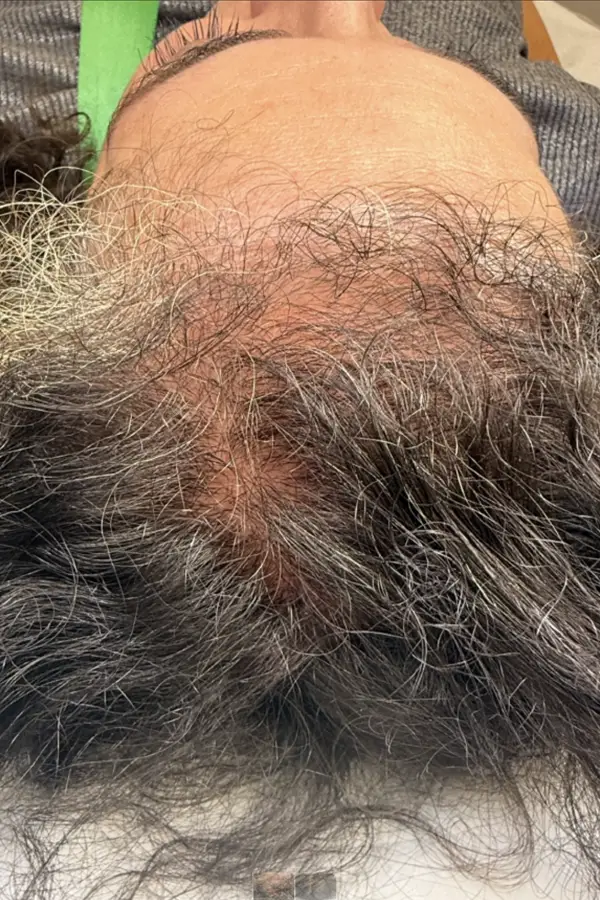
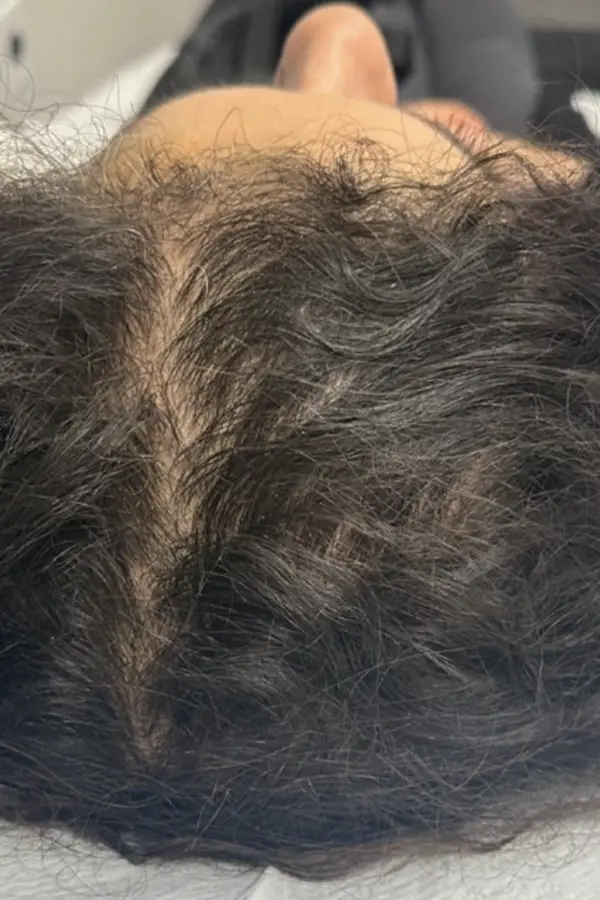
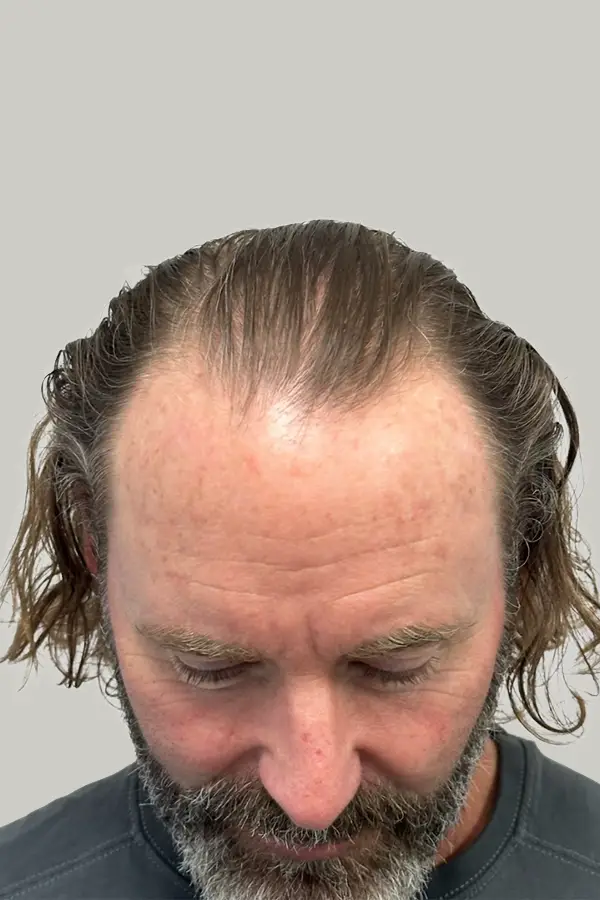
Male pattern hair loss is driven by DHT progressively miniaturizing hair follicles. Evidence-based treatment started early produces significantly better outcomes than treatment started late.
get startedMale pattern hair loss — androgenetic alopecia — affects the majority of men to some degree over their lifetime. It follows a predictable pattern driven by the hormone dihydrotestosterone (DHT) and classified on the Norwood scale, ranging from mild temple recession to significant crown loss.
Unlike some forms of hair loss that are temporary or reversible, androgenetic alopecia is progressive without intervention. Follicles that miniaturize fully eventually stop producing hair entirely — which is why the clinical emphasis is on early intervention before that threshold is reached.
Most men come in when the loss has reached a threshold that affects how they feel about their appearance — often a specific photo, a comment, or a gradual awareness that their hair looks fundamentally different than it did. The most common regret expressed in consultation is having waited. Patients who come in early have meaningfully more options and better expected outcomes than those who wait until the loss is advanced.
Male pattern hair loss — androgenetic alopecia — is caused by the progressive sensitivity of hair follicles to dihydrotestosterone (DHT), a hormone derived from testosterone through the action of the enzyme 5-alpha reductase.
In genetically predisposed individuals, DHT binds to receptors in scalp hair follicles and triggers a process called miniaturization: the follicle progressively shrinks, the hair it produces becomes finer and shorter, and the growth cycle shortens until the follicle eventually becomes dormant. The pattern follows the Norwood classification, typically beginning at the temples and crown.
Genetics determine susceptibility, but the process is hormonal — which is why pharmacological approaches targeting DHT production are the most effective intervention available.

Patients with male pattern hair loss typically notice:
Male pattern hair loss follows a predictable progression that varies in rate between individuals but trends in one direction without intervention. In most men, the process begins in the late teens or 20s — often silently, before visible thinning is apparent. The active miniaturization phase can take years to produce noticeable results, which is why the visible change feels sudden even when the underlying process has been ongoing.
By the time most patients seek treatment, they are typically at Norwood stage 2 or 3 — with temple recession and early crown involvement. The follicles in affected areas are still partially active and responsive to treatment. Patients who present at Norwood 4 or above have significantly fewer active follicles to work with.
Effective male hair loss treatment targets the hormonal driver while supporting the follicular environment.
At CAMI, male hair loss treatment begins with a comprehensive assessment: a full hormonal panel, nutritional status, thyroid function, and a clinical evaluation of the current Norwood stage and rate of progression. We don’t recommend a single intervention — we build a protocol that addresses the primary driver (DHT) while supporting the follicular environment from multiple angles.
The most important clinical message we give patients with male hair loss is about timing. Follicles that have fully miniaturized cannot be recovered. The window for meaningful intervention is open for years in most patients — but it closes gradually, and waiting until the change is significant means working with significantly less. Starting before the loss is obvious is what produces the best long-term outcomes.

Care guided by experience, precision, and a deep understanding of natural beauty.
get started